Following the defeat of the Guanches, the town of San Cristóbal de La Laguna was founded in 1497 in Aguere (an indigenous place name meaning “the lagoon”). Since 26 June of that year, the name Villa de San Cristóbal has been documented. It was decided to locate it where it stands today because it is far from the coast, thus avoiding pirate attacks; because it was a stopping point for those travelling from one side of the island to the other; because of its climate and fertile soil for crops and pastures; and because of the availability of drinking water in the vicinity.

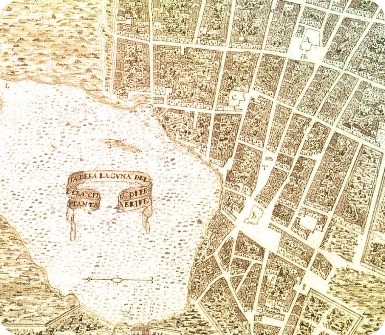
The historic centre of the city took on its definitive form at the end of the 16th century, as can be seen in the first surviving map of the city, drawn up in 1588 by the Italian engineer Leonardo Torriani.

One of the institutions that reflects the fullness of citizenship and municipal authority since the founding of La Laguna is the Island Council, which initially met in the Church of Our Lady of La Concepción, later in the Chapel of San Miguel, and since 1547 in the Town Hall.

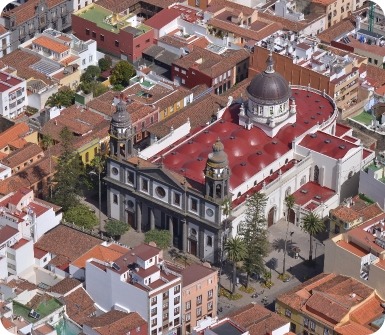
In terms of religion, examples of religious architecture can be seen on every corner and every street, with a multitude of chapels, crosses, calvaries, chapels, churches and convents, the latter of which began to be built in the early 16th century.

La Laguna is also home to ancient cultural institutions such as the University of San Fernando (1792) and ecclesiastical institutions such as the Bishopric, established in the city since 1819. It was precisely during this century (the 19th century) that the urban perimeter of the city was expanded, without affecting the pride of its historical past or slowing down its development towards the future.

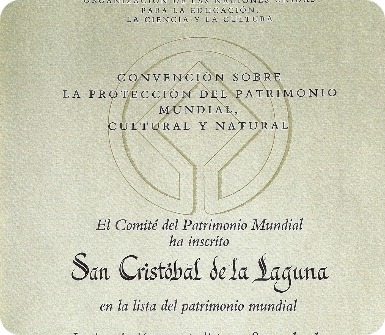
From the 19th century onwards, as a result of the economic development of Santa Cruz de Tenerife, La Laguna saw its privileges and prerogatives diminished until, in 1833, it lost its status as capital, which passed to Santa Cruz. However, it continues to boast its status as a cultural capital, reinforced by the international recognition of its historic centre as a UNESCO World Heritage Site on 2 December 1999.

The Torriani Plan

Historical Overview

World Heritage City (UNESCO)

Notable buildings in the historic complex