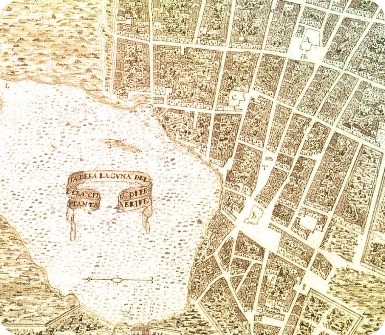
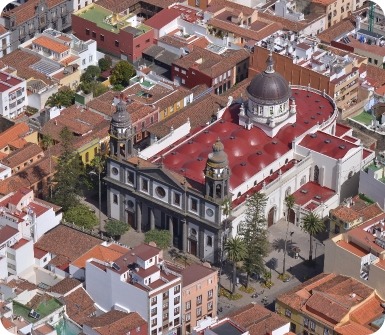
San Cristóbal de La Laguna has a universal and exceptional value for the conception of its plan. This historical complex is the archetype of the city-territory. It is the first example of a non-fortified city, conceived and built according to a plan inspired by navigation, the science of the time. Its space is organized according to a new peaceful social order inspired by the religious doctrine of the millennium that the year 1500 brings about.
The city plan is read as a “star map”, in which the dots correspond to particular points of the city and to the relations between certain of these points and the whole. It has a symbolic meaning and is interpreted as a sea chart or constellation map of the time.
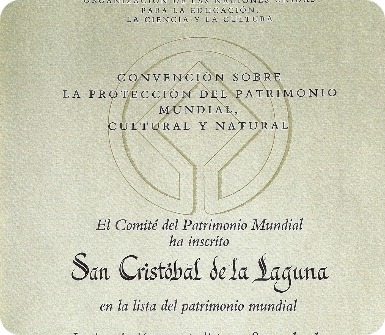
All this led to the fact that on December 2, 1999, the World Heritage Committee of the U.N.E.S.C.O. meeting in Marrakech (Morocco) made public its approval of the title of World Heritage for the city of San Cristobal de La Laguna, Tenerife. The World Heritage Committee justifies this distinction based primarily on the following criteria:
La Laguna is an archetypal historical complex of the “city-territory”, the first example of a non-fortified colonial city and a direct precedent of the new American foundations. It was drawn from a complex project, based on philosophical principles, carried out thanks to the knowledge of navigation, the science of its time.
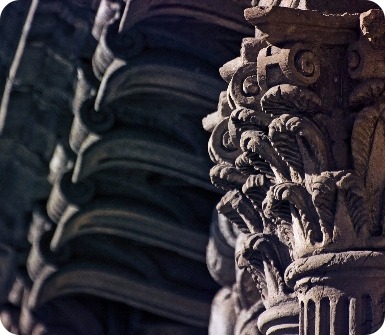
Its original layout, dating back to 1500, has remained intact since its creation. It preserves in good condition about six hundred buildings of Mudejar architecture. La Laguna is a living example of the exchange of influences between European culture and American culture with which it has maintained a constant link.
This worldwide distinction to the values of La Laguna, which recognizes it as an ideal city, a city of peace, rewards not only the effort made during the last nineteen years by the different Administrations that have sponsored the project, but it is also a recognition to all the inhabitants who during these five hundred years have loved and cared for this city.